An afternoon baking with Veszprémfajsz’s rétes experts
A visual essay
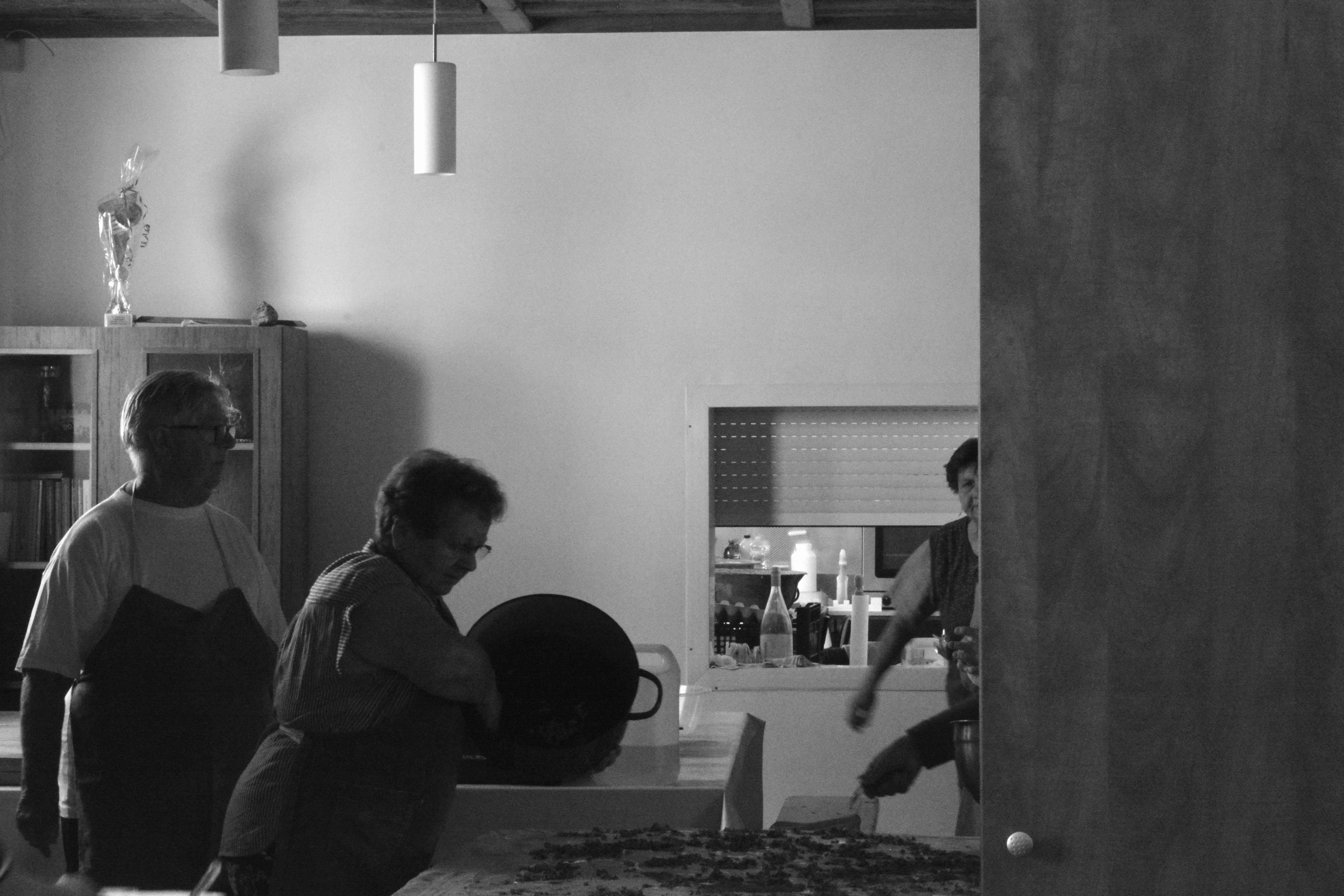
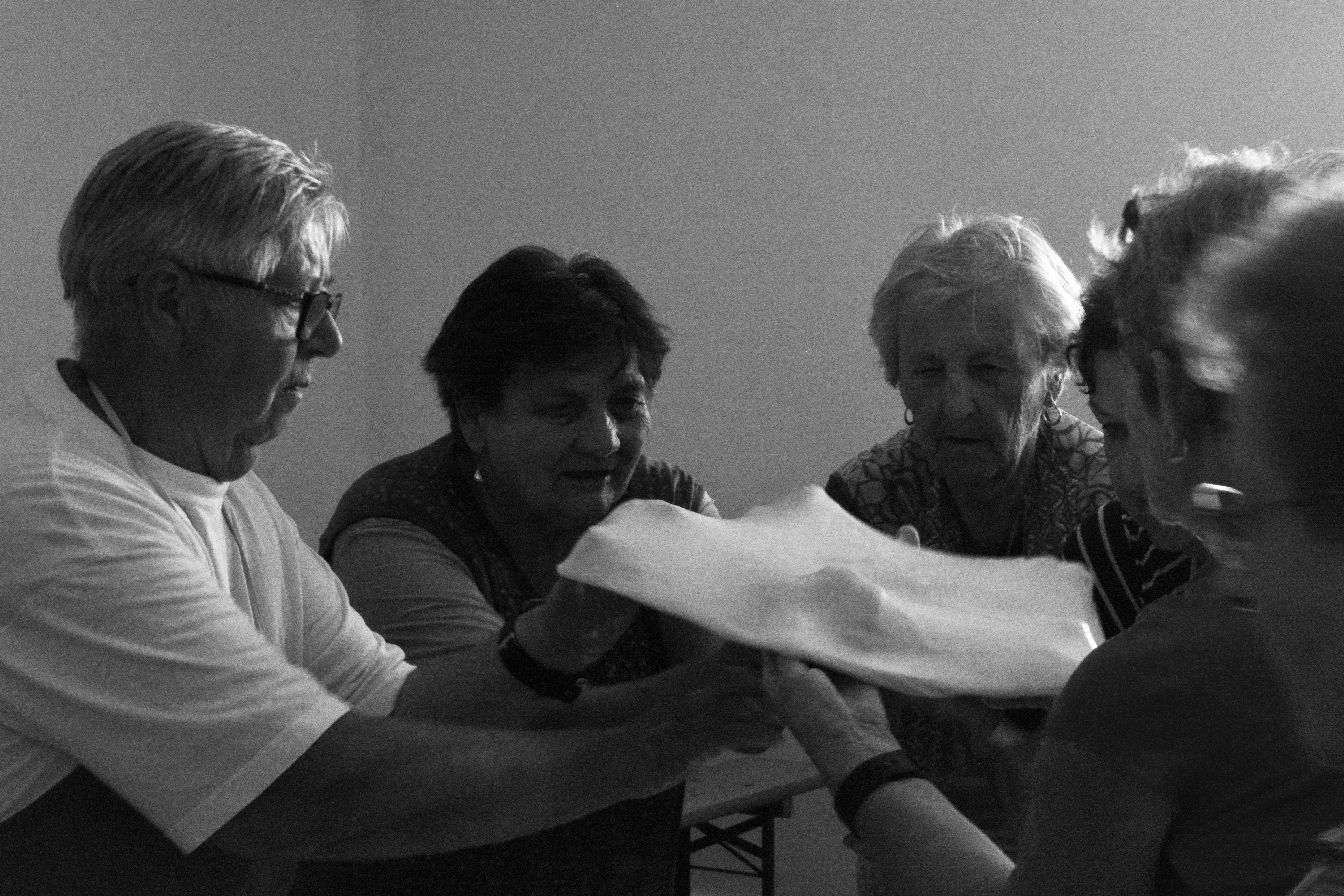
Our eyes adjust to the darkness of the village community centre, and are confronted with a bustling crowd of elderly women huddled around a rickety wooden table. Here, everyone seems to intuitively know where their place is: where their hands need to be, which ingredients to pass to each other and when to do so. Us being the exception to this of course.
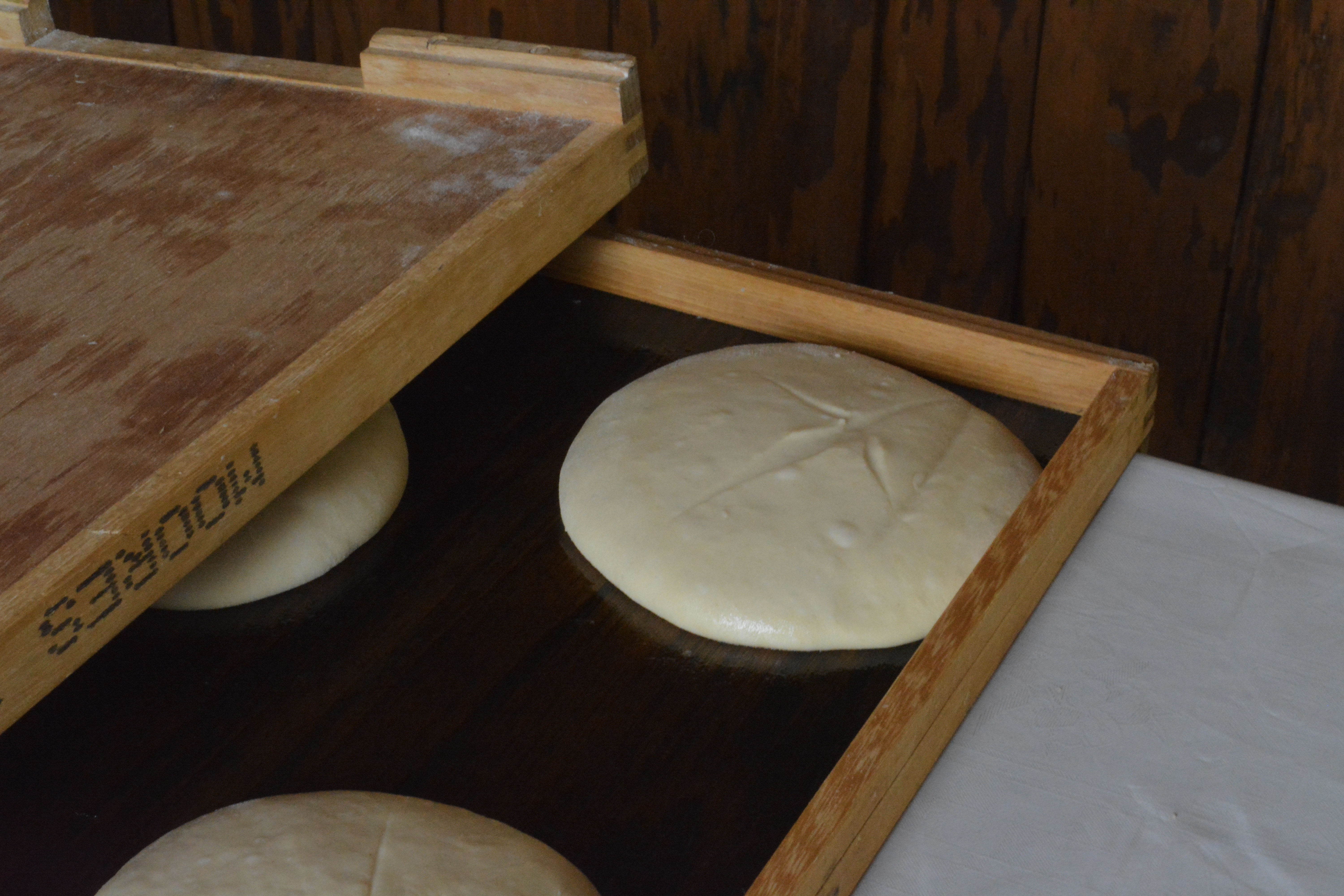
As we’re told to make ourselves useful instead of just standing there we’re also informed that they have been churning out logs of pastry since eight in the morning, and they clearly show no signs of stopping at two in the afternoon. The daily quota is eighty logs of rétes, the Hungarian take on what is essentially known by the rest of the world as strudel. The reason for this inordinate amount of pastries is because in a couple of days its the annual village days, the falu nap, where the entire village comes together, celebrates another year passed, and more importantly, feasts on these very same handcrafted rétes.
Many of these women are well above seventy-five, most of them widowed, and there’s at least three of them introduce themselves as a version of Erzsébet. Stereotypes of age don’t seem to stick to these ladies in colourful aprons and floured hands–they are loud, full of life, bickering amongst each other and cracking jokes all while they go about their business with great expertise and earnestness. It is clear that this is a group whose members have potentially known each other for all of their lives and have the kind of shared history that only comes with the passing of many years. While half of the group tends to the dough at hand, the others offer their company –and opinions– freely from the trestle table off to the side. It is clear that this activity is not solely about delivering a product, rather more about spending time together by doing a task that is productive and valued by the community at large.
The community that we’re visiting this afternoon was once a thriving, tight-knit community of Danube Swabians populating the village of Veszprémfajsz in the Balaton highlands. Today, it struggles to keep its unique cultural heritage alive as the youth move into the cities in search of better pastures. Swabian presence in Hungary is extensive all the while being quite diverse, with the first wave of german-speaking immigrants settling in the Hungarian Kingdom as early as 1000 A.D, which was followed by many others in later centuries, with the most notable happening after the Ottoman occupation of Hungary in the eighteenth century. [1]. The village of Veszprémfajsz was repopulated by german peasants starting in the latter half of the 1750s, after around 150 years of complete depopulation due to the Ottoman occupation, and it has retained some german markers of identity ever since [2]. In Veszprémfajsz there are a few telltale signs that we have entered a historically Swabian community–the one and only street of the village is padded with linear houses on ribbonlike plots of land protected from the back by barns that formed essentially a wall around the village [3]; an unassuming building near the bus stop holds an assortment of vernacular items donated by the community as a way to showcase the everyday lives of Swabians; most of the surnames engraved on the headstones in the graveyard have a decisively German ring to them.
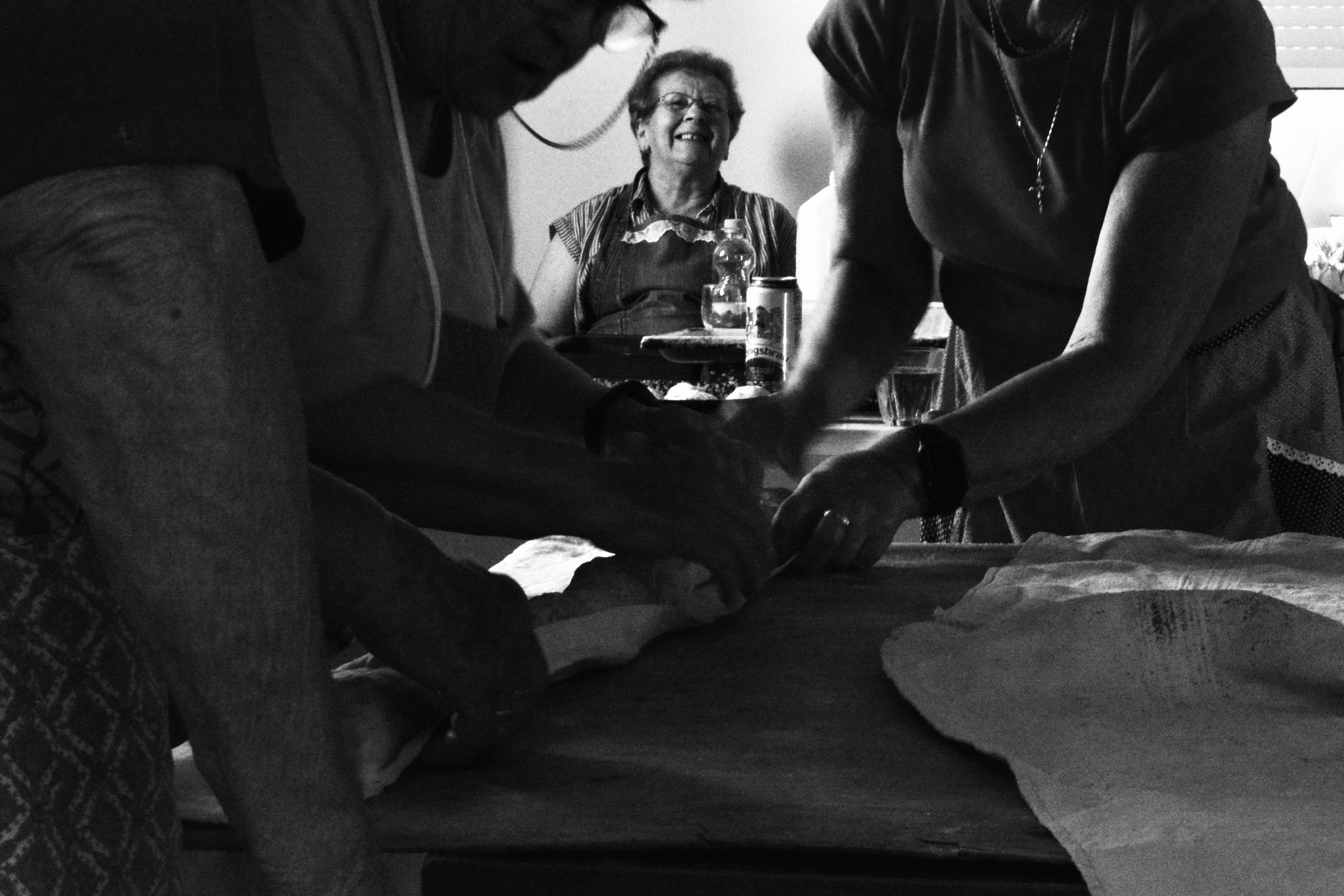
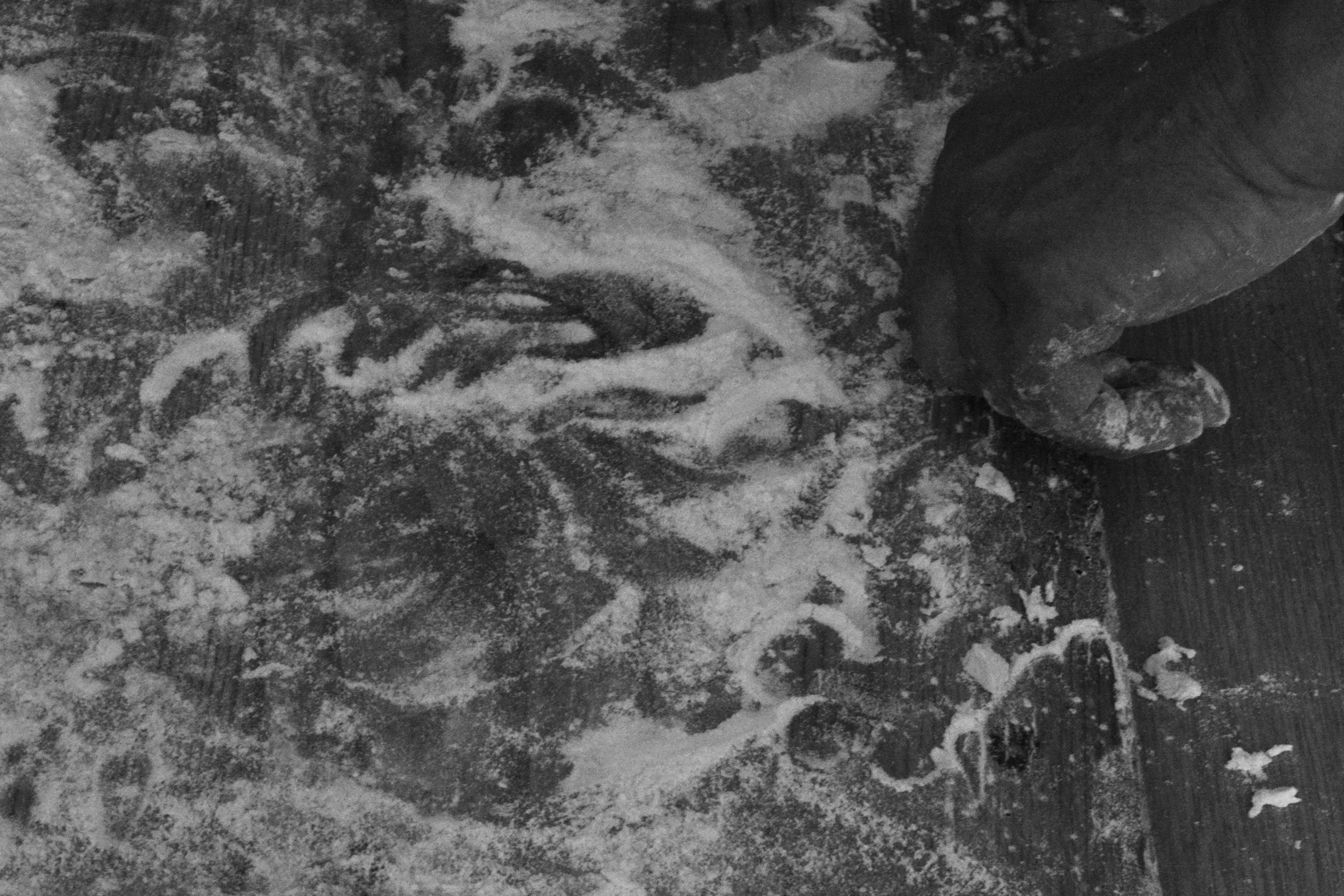
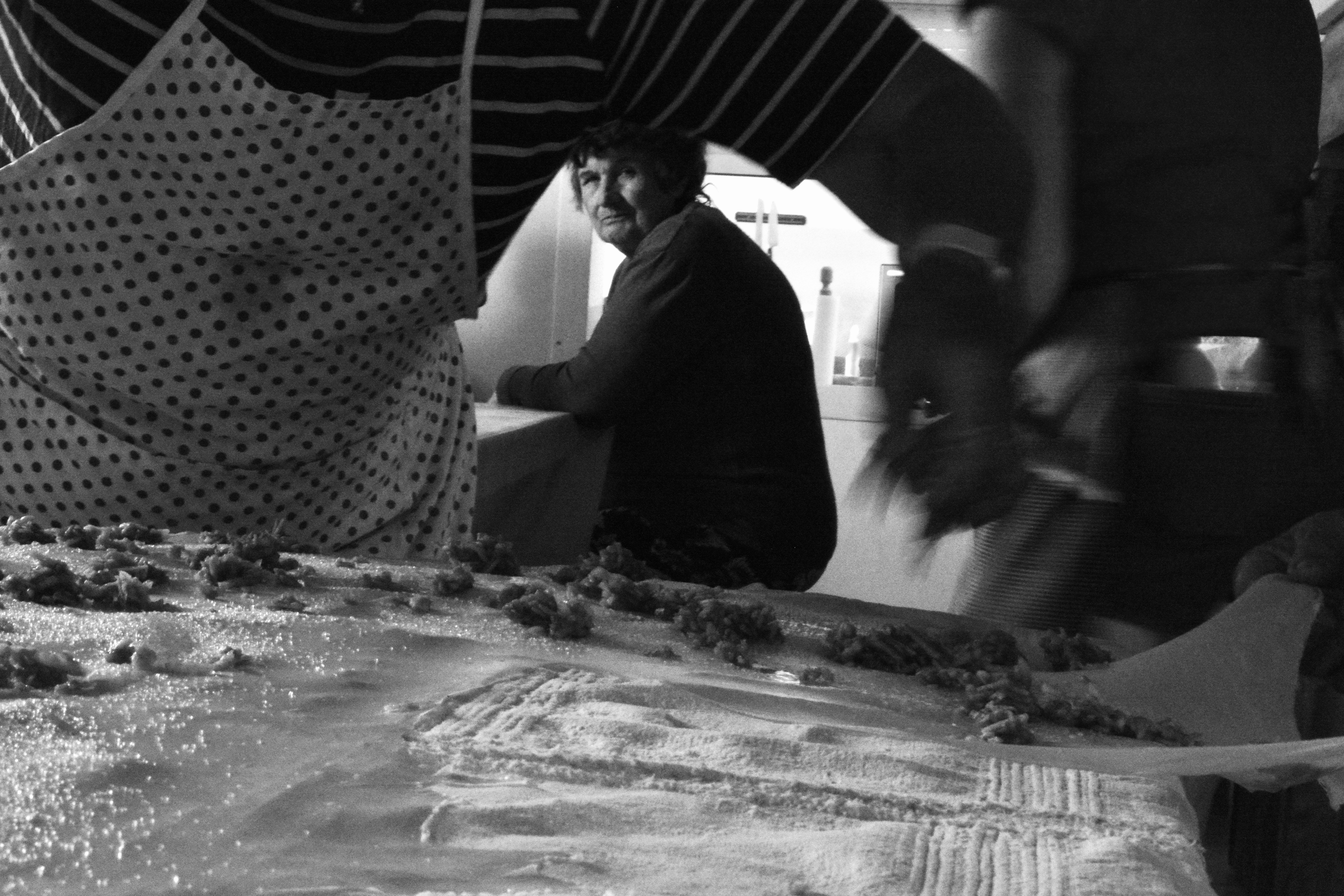
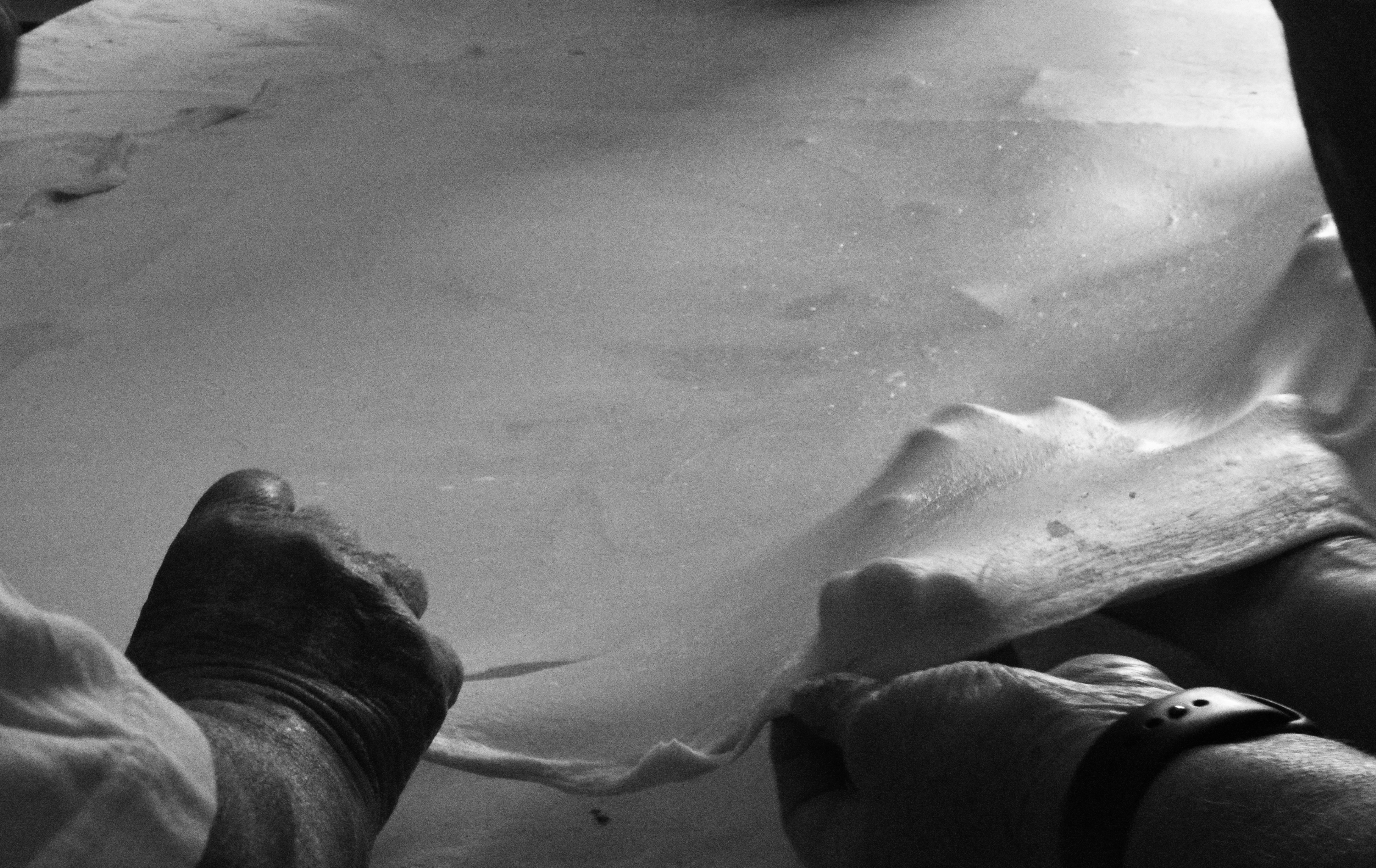
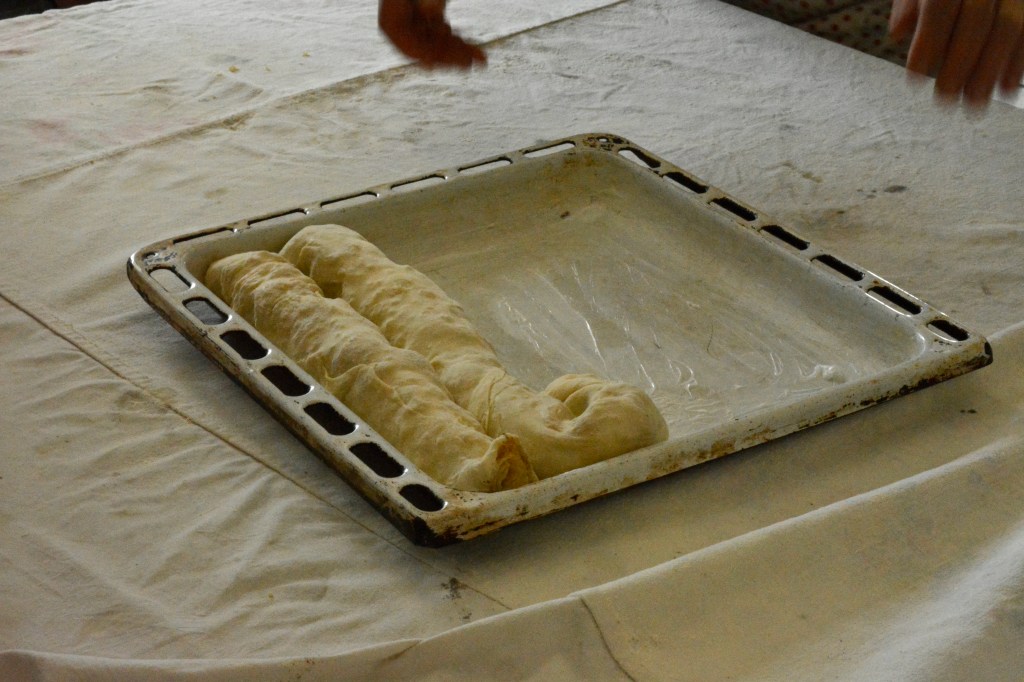
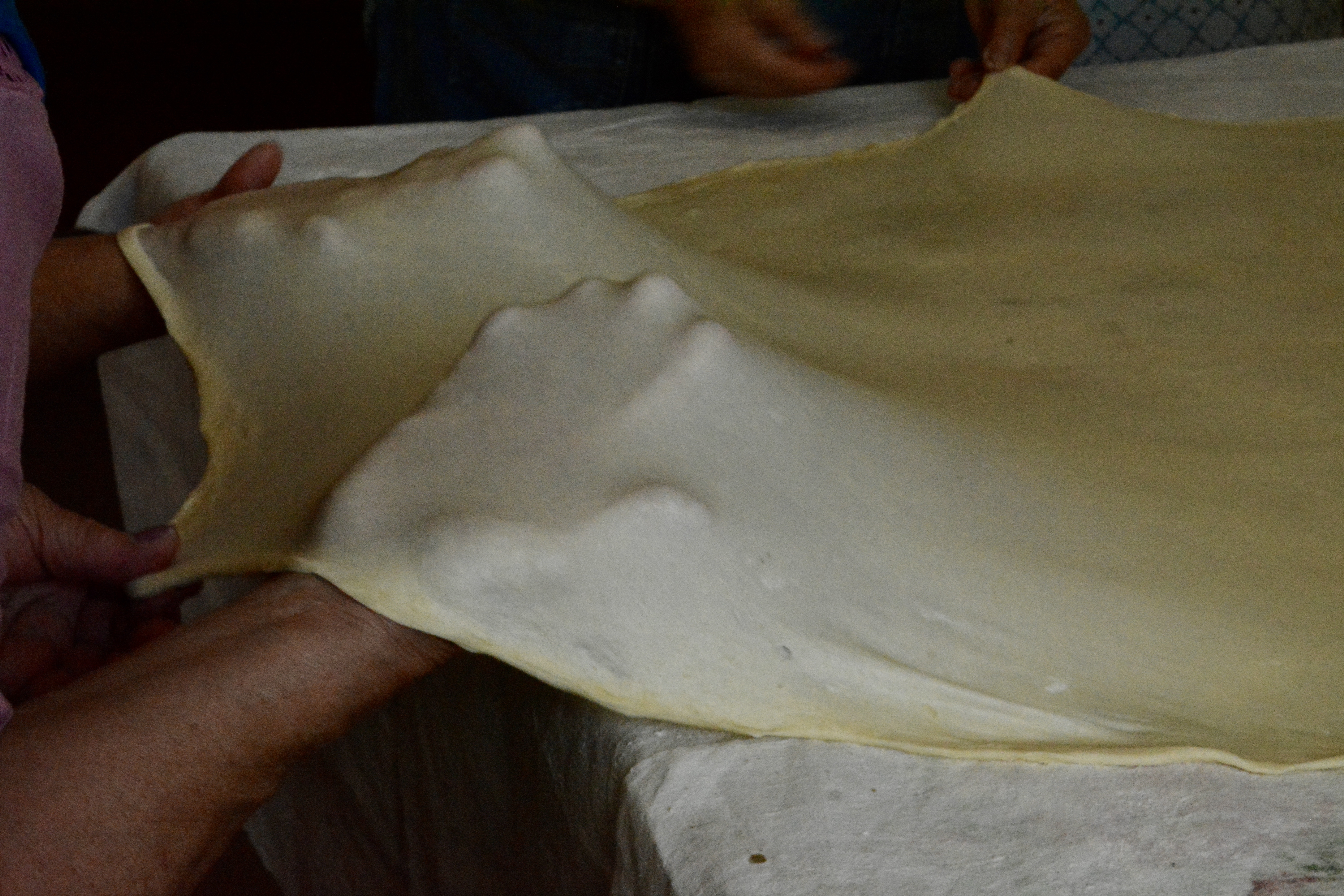
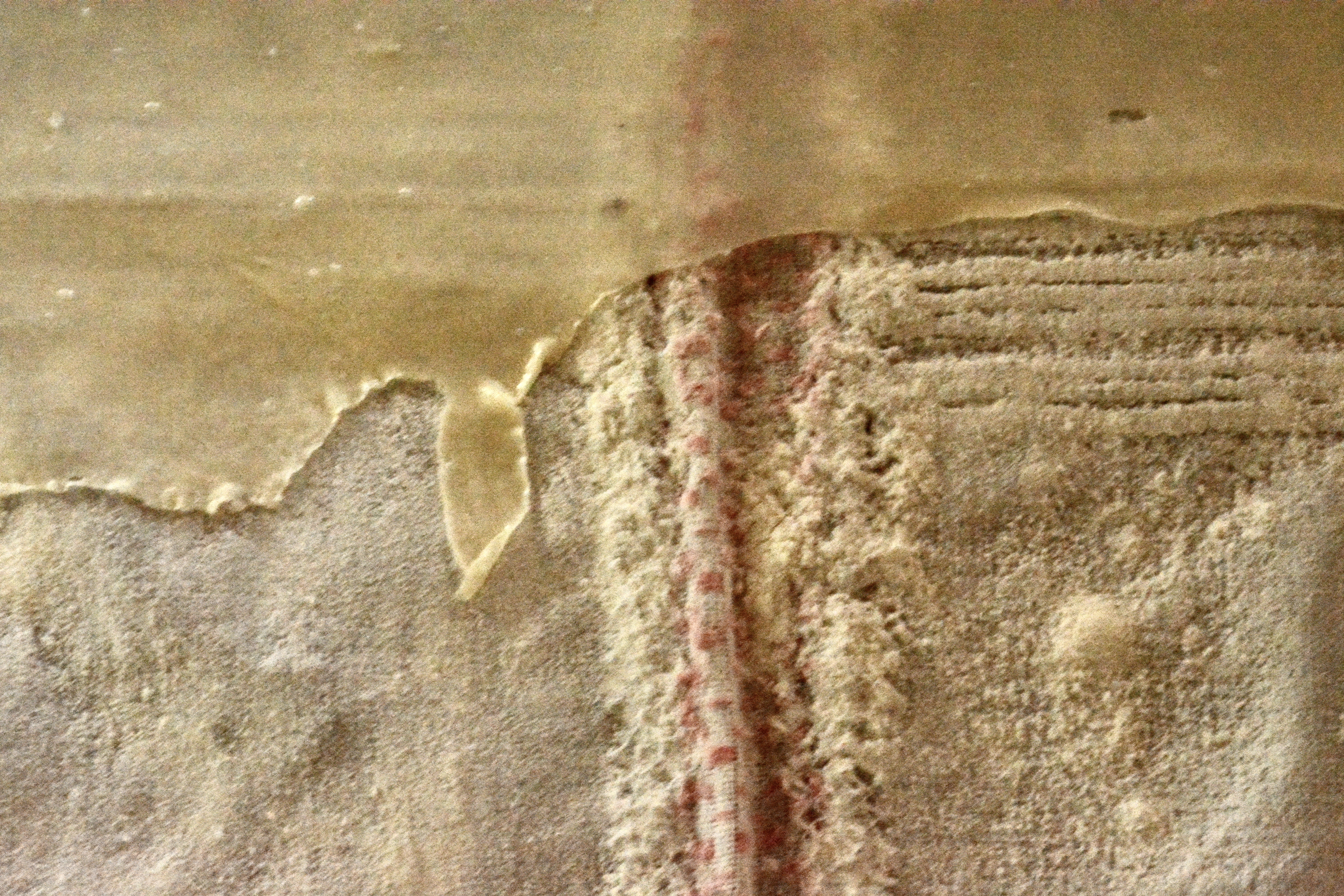
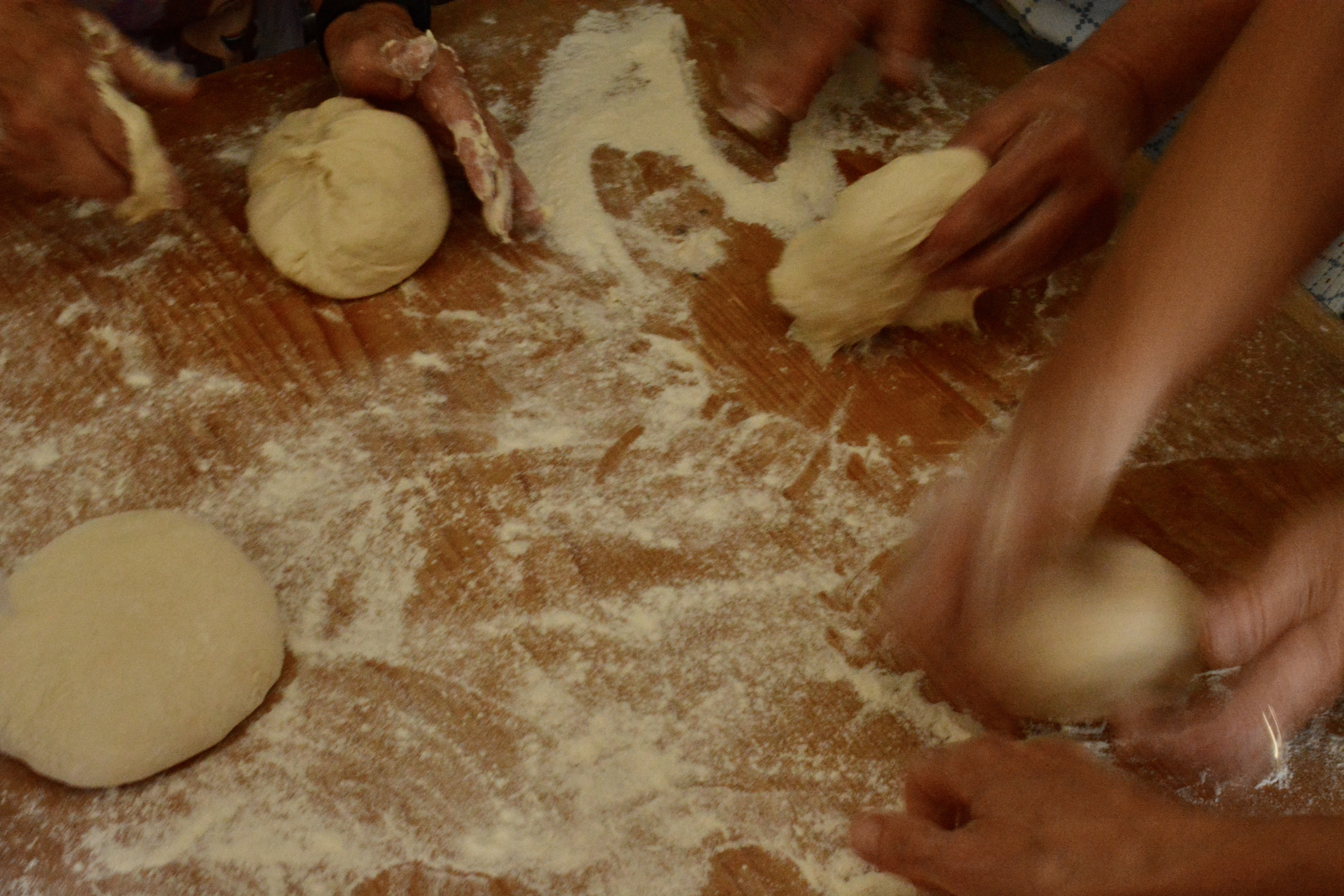
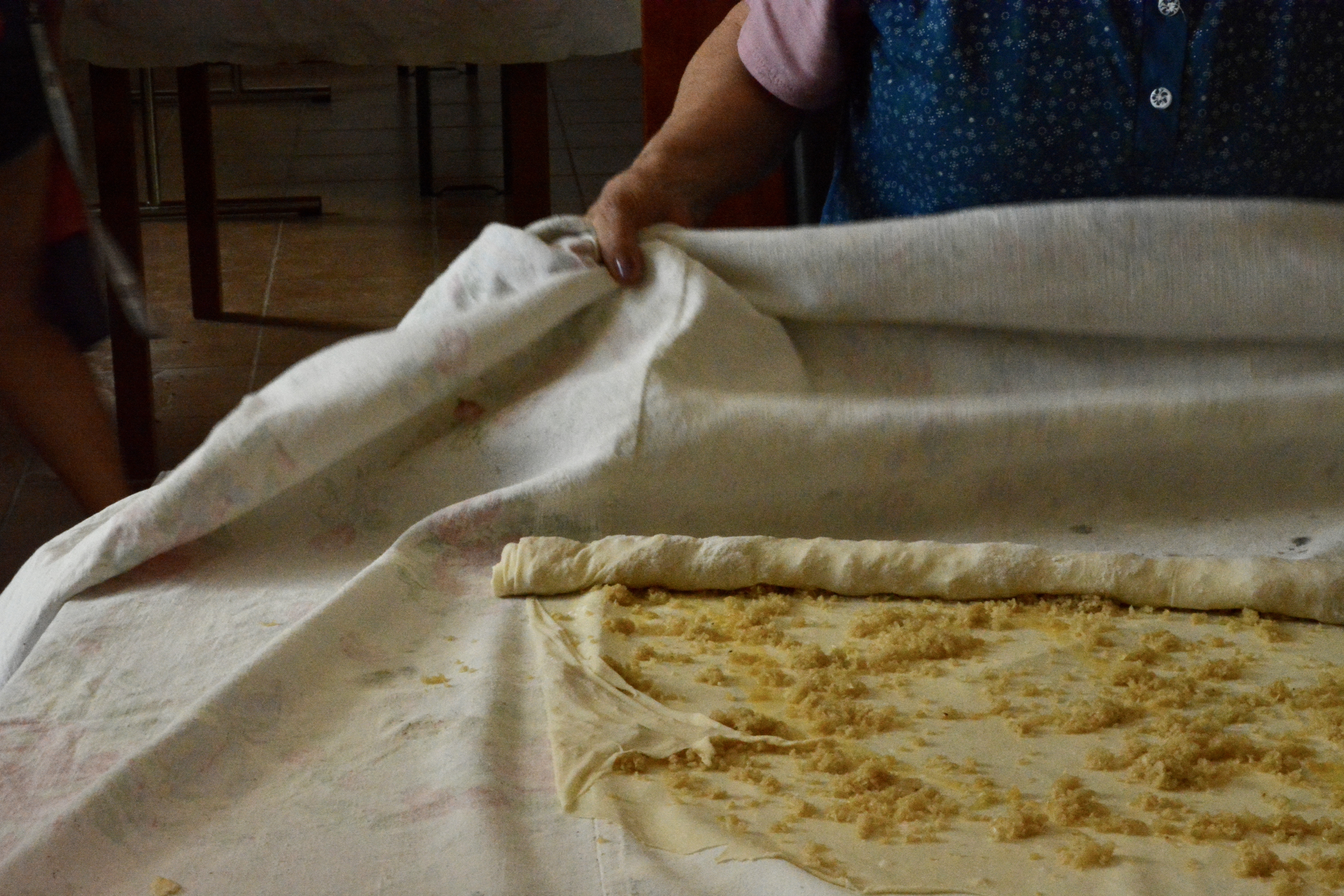
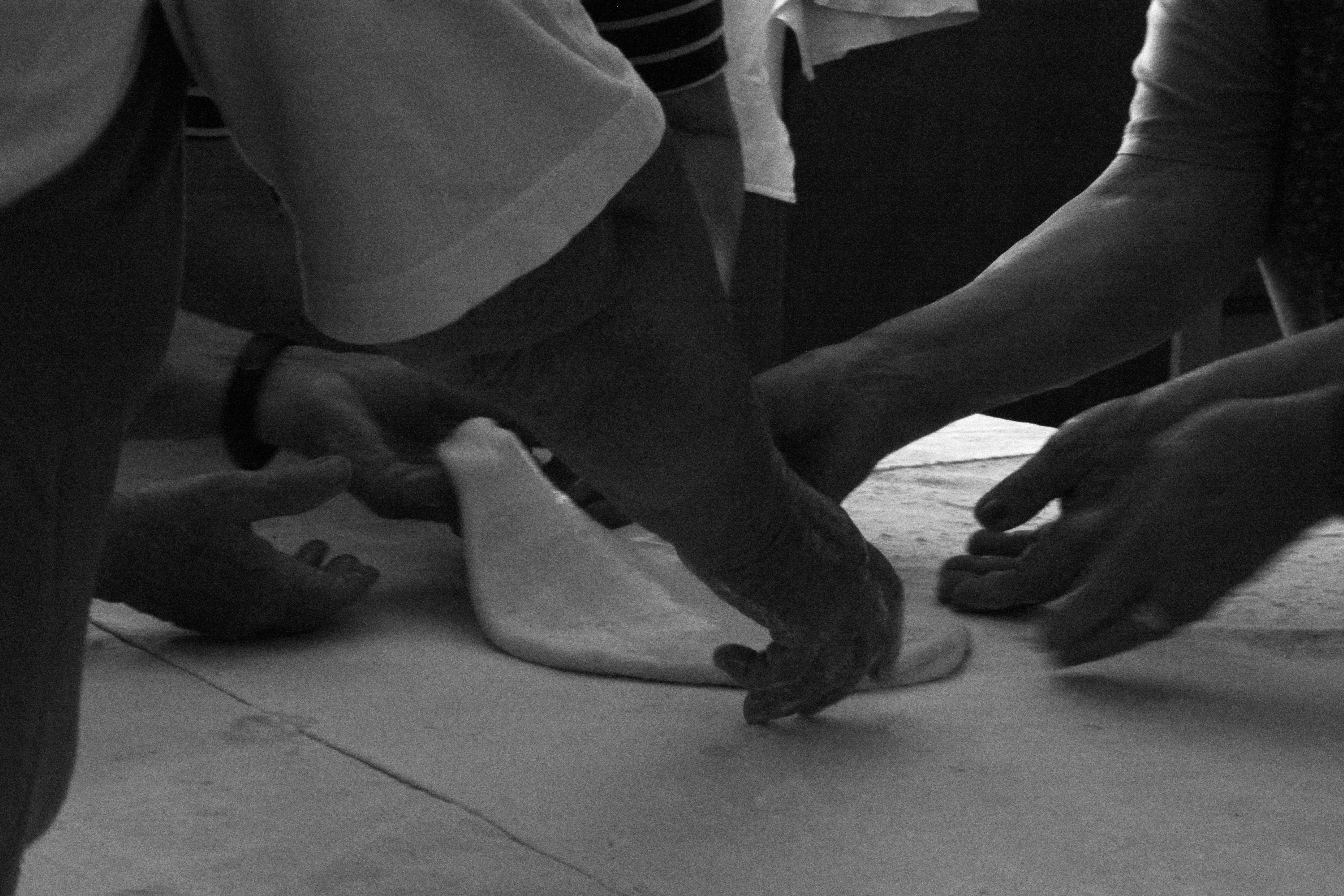
No time for quiet observation, we are mercilessly thrust into the aproned throng and instructed on the go. After a while, we catch onto the rythm of the process. We take a rested ball of dough and lay it on the tablecloth, brush a spoonful of melted fat onto the surface and gather round to stretch the dough out gently but firmly with the palm of your hands. When someone feels resistance they give a shout and we place the dough back onto the surface to rest before continuing our quest to stretch the dough as thinly as possible without creating gaping holes in the middle. Even if holes appear, it doesn’t prove to be the end of the world, we just make sure to have the best side covering the outside of the logs when we roll them up into their final forms. Once the dough is stretched papery thin with the edges hanging off of the table we twist off the inectiveably thick edges with swift and decisive motions while others are already splashing globs of sour cream, sprinkling cherries coated in sugar, grated apples with cinnamon, sweetened cottage cheese or ground poppy seeds onto the surface in a Pollockian cavalcade of colour and texture. When this flurry of toppings is deemed adequate a designated person takes a hold of one of the ends of the tablecloth and deftly jerks up the cloth so that the dough starts rolling onto itself without fail every single time.
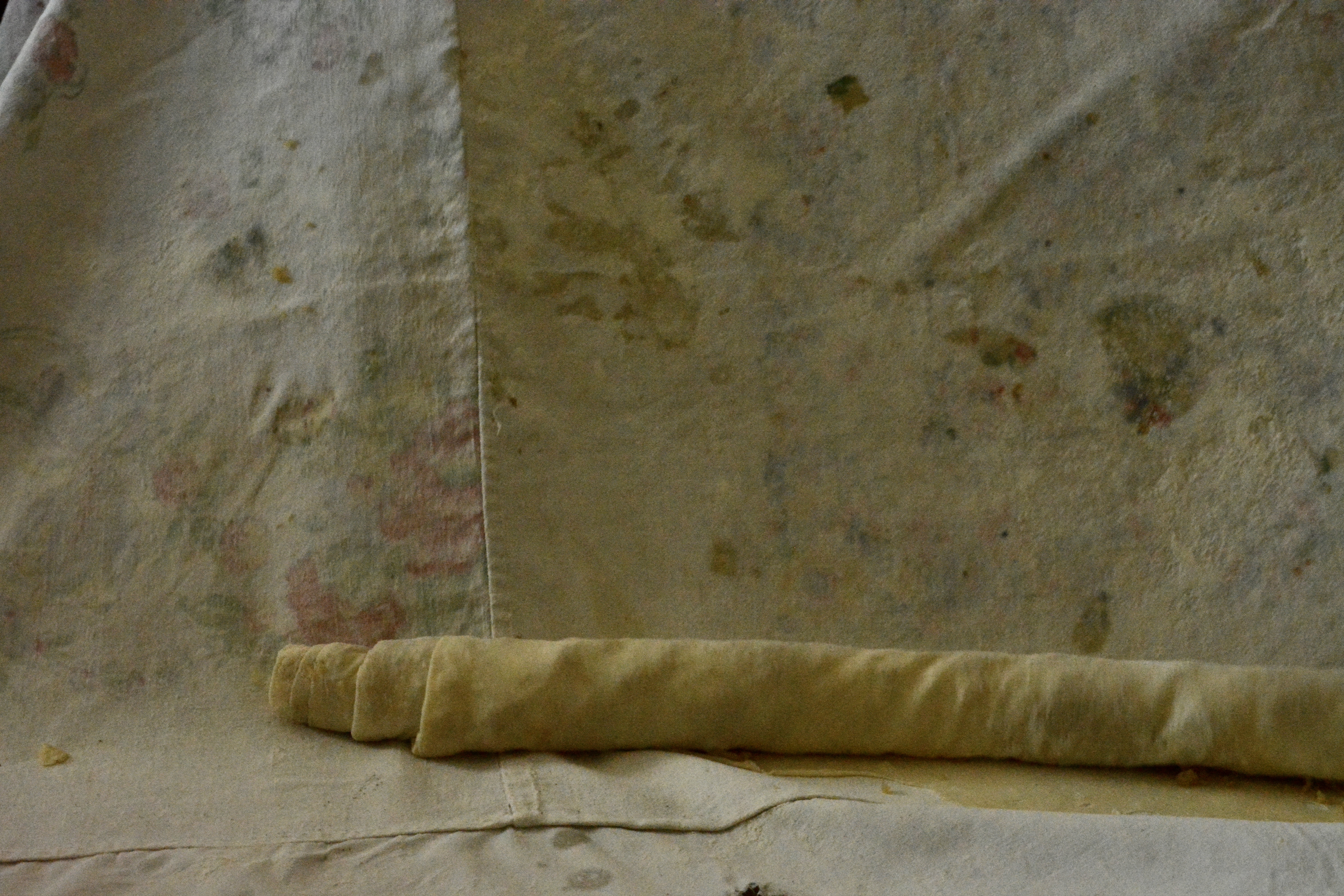
At the end of the day, we are left to our own devices to make some of our own rolls of rétes indipendently. One of the Erzsébets, a spry woman nicknamed Bözsi néni, stays behind and watches over us as we struggle to perform what seemed like such a smooth process in the hands of the rétes masters. She laughs as we keep on lifting the dough higher and higher as we stretch it in an attempt to control the unruly dough. Though we know that as amateurs our pastries do not come even close to the quality of the ones we have just observed in-the-making, we’re reassured that they have a couple of decades of practice on us anyway.
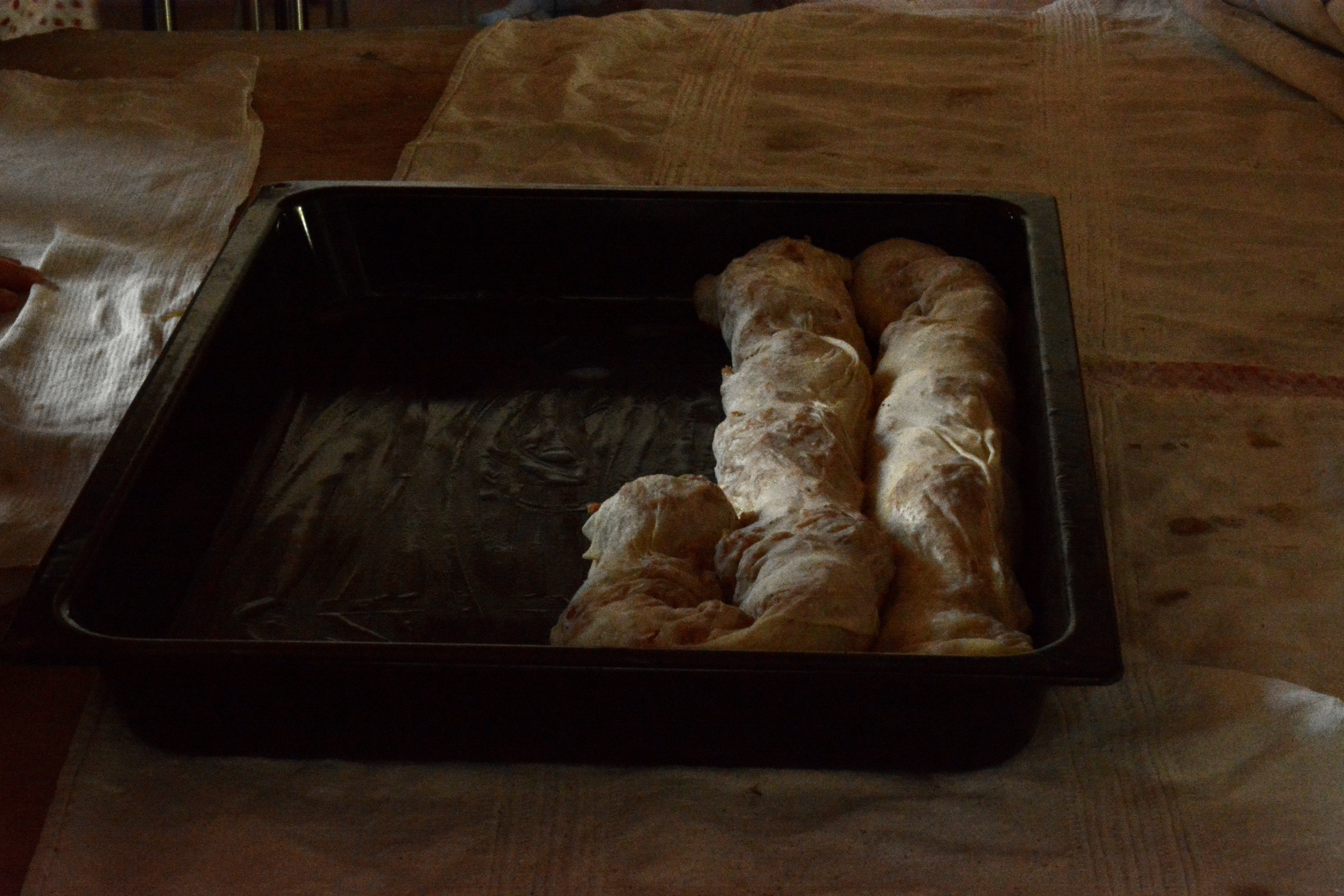
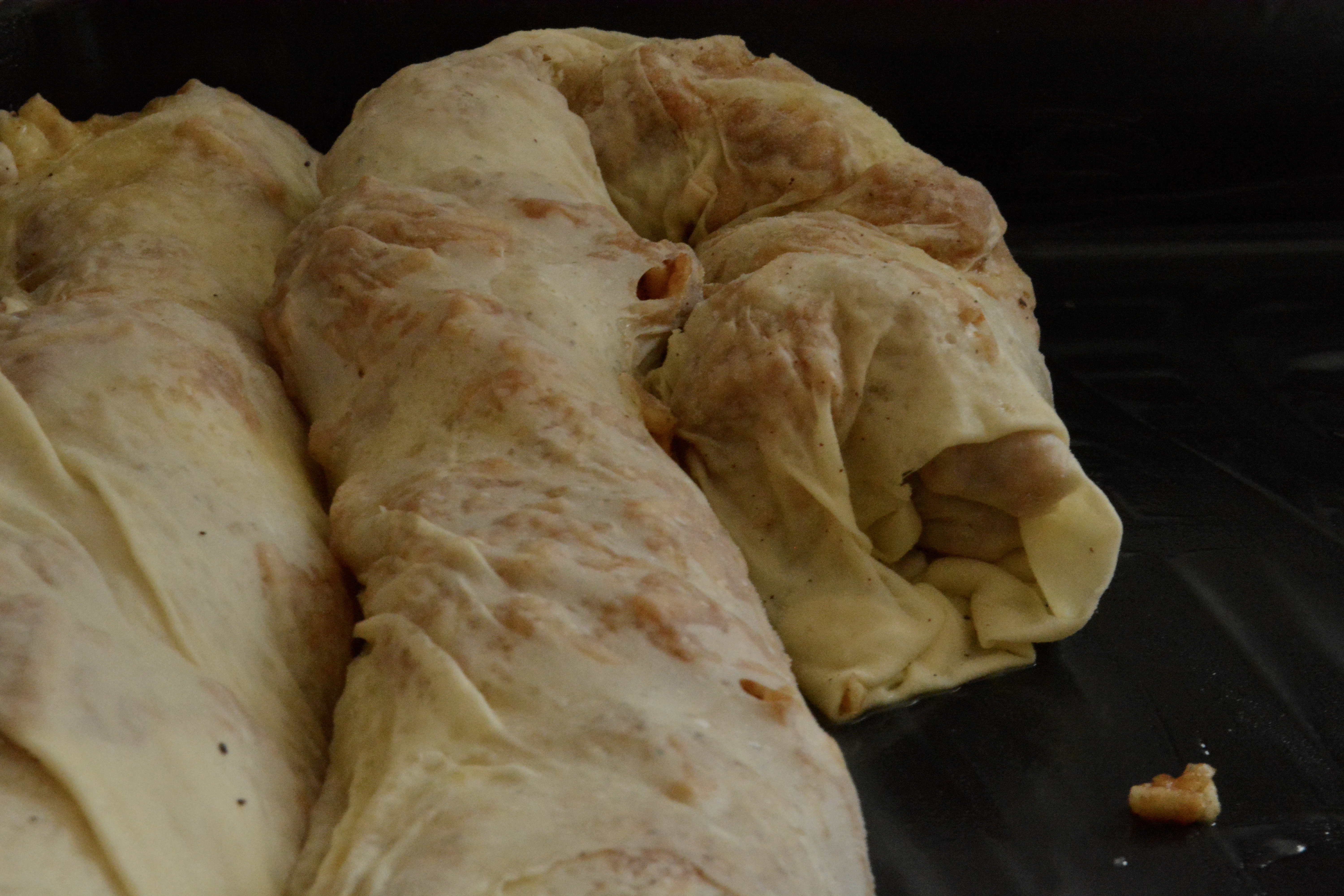
As we sit around the oven back at Erika’s place waiting impatiently for the fruits of our labour to bake, we reflect on our afternoon spent learning how to make rétes from scratch. We divide the piping hot pastries amongst ourselves, burning our fingertips in our rush to access the delicious harmony of fillings, and sample each one standing around the kitchen counter. Though it’s a pastry that we all know and love, this feels different, more exciting. Perhaps it tastes different because we now know the labour, both immediate and accumulated, that went into what we are consuming, but as the flakes of golden dough stick to our greasy fingers I can’t help but feel a certain level of sadness over the realisation that what we have witnessed over the course of the afternoon is a process, a community, that is actively being lost in the impatience of contemporary life. I wonder if there will be a next generation of Erzsébets who will continue this cycle of gathering every so often before a big event, stretching rétes dough by hand while gossiping, and sitting back while watching the generations below them enjoy what they have prepared.
Many thanks to Veszprémfajsz’s choir for their patience and willingness to share their craft and to Erika M. for her continued efforts in connecting the communities of Nemesvámos and Veszprémfajsz together.
All participants gave verbal consent to being photographed.
References
[1] Bindorffer, Györgyi. “No Language, No Ethnicity? Ethnic Identity, Language and Cultural Representation among Hungarian Germans.” Review of Sociology 1998.
[2] Schwaben.hu. “Deutsche Wurzeln im Komitat Wesprim: Veszprémfajsz.” Accessed August 31, 2023. https://schwaben.hu/telepulesek/veszpremfajsz.
[3] Cook, Jeffrey. “Architecture indigenous to extreme climates.” Energy and Buildings 23 (1996): 277-291.
 Culturing Care